Bad weather forces Rahul to cancel Almora rally, return to Delhi
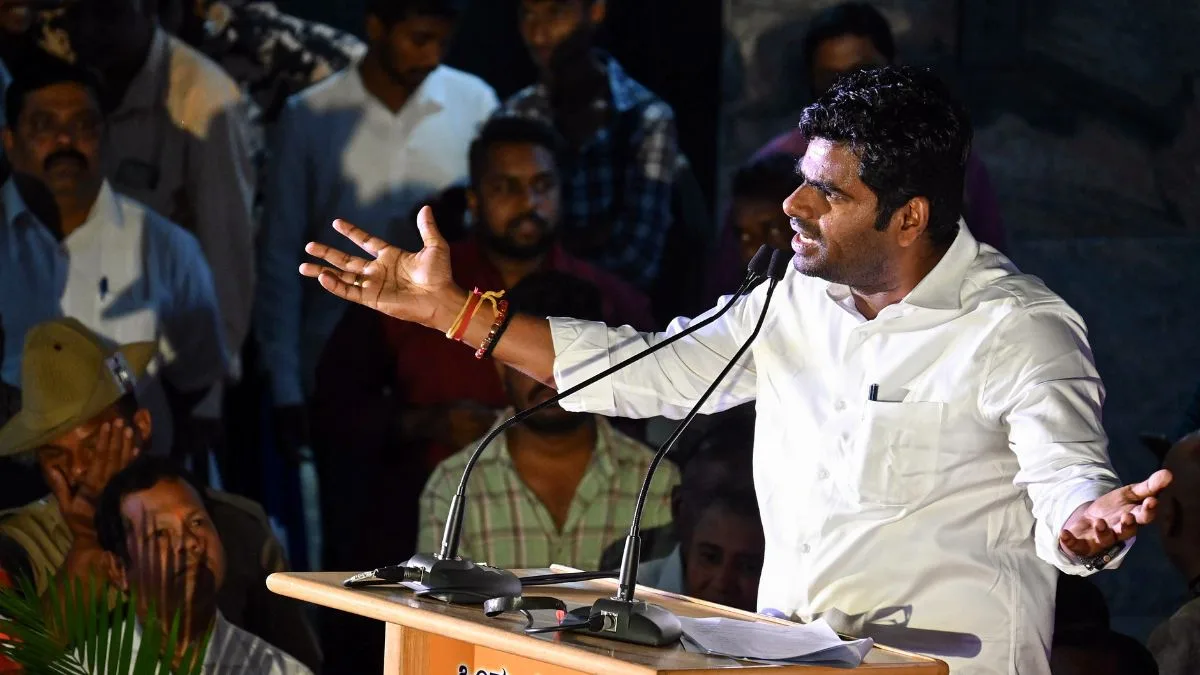
Congress MP and Leader of the Opposition in the Lok Sabha Rahul Gandhi's Almora rally was cancelled on Thursday owing to bad weather conditions in the Kumaon region.
The collapse of the Non Cooperation Movement was the beginning of the breakdown of the national consensus leading to the debate between composite nationalism and the two-nation theory.




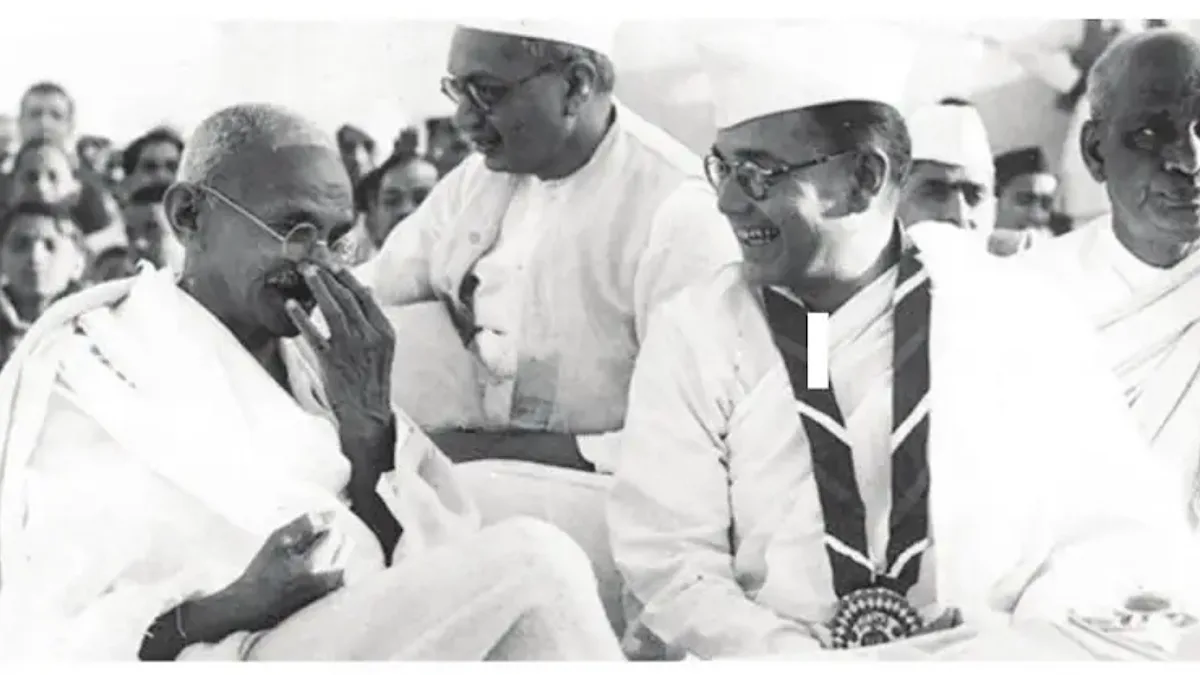
Photo:SNS
The collapse of the Non Cooperation Movement was the beginning of the breakdown of the national consensus leading to the debate between composite nationalism and the two-nation theory. The Gandhian era will be remembered for its novelty and many other positive features including a realization that the Indian national movement cannot be restricted only to secure political freedom but must also bring about social and economic betterment of its people.
It was during this era that a large number of women began to actively participate in the Gandhian programmes. Till 1927, the general consensus among the Congress leadership was to demand dominion status akin to the set-up that existed in Australia, Canada, New Zealand and South Africa. Ambedkar accepted the demand of dominion status provided the depressed classes were protected. It was at the 1928 Calcutta session of the Congress session that Subhas Bose questioned this consensus and insisted on independence with no continued British connection. Nehru concurred with Subhas. Gandhi was still in favour of dominion status stating that it would be a ‘grievous blunder to put independence against Dominion status or compare the two and suggest that Dominion status carries humiliation with it and that independence is something that is triumphant”.
Advertisement
He took note of the attraction of leftist ideas among the younger leaders, the rise of the Hindustan Socialist Republican Association (HSRA), and nominated Nehru to be the next president of the Congress in order to accommodate new ideas to maintain party’s cohesion, still thinking that the young president with responsibility “will mellow the youth and sober the youth and prepare them for the burden they must discharge”. The Congress, the Muslim League and the liberals opposed the Simon Commission as it did not have a single Indian representative and did not mention grant of dominion status.
Advertisement
The 1928 Nehru report demanded dominion status and did not ask for complete independence. The Congress session held in Lahore 1929 under Nehru’s presidency took the decision for Poorna Swaraj. The resolution was drafted and moved by Gandhi. It pointed out the ill effects of British rule on India. The entire nation joined in raising the Tricolour flag and singing patriotic songs with a pledge to work towards India’s emancipation. Gandhi urged people to maintain discipline, restraint and dignity, spinning, constructive work, service to Harijans, prohibition and Hindu Muslim unity. The first Independence Day observance was a splendid success though ominously the Muslims and Christians stayed away from the celebrations. Gandhi launched the salt satyagraha with a march on foot from Sabarmati ashram to Dandi on 12 March 1930 covering a journey of 240 miles (385km) approx. with a band of followers. He reached Dandi on 5 April and the following day, on 6 April picked handfuls of sand and produced salt, breaking the law (Tilak was the first to initiate a no tax campaign in Maharashtra in 1896-97). Subhas compared the Dandi march to Napoleon’s March to Paris after escaping from Elba (March-July 1815) and Mussolini’s March to Rome (24 October 1922) arousing “the entire countryside through which he [Gandhi] passed and it also gave him time to work up the feelings of the country as a whole”. The Round Table Conference that followed discussed India’s future constitutional set-up. With no promise of even dominion status, the Congress had to climb down leading to disappointment among its members. Nehru was disheartened and on the brink of rebellion. The Gandhi-Irwin Pact was signed on 5 March 1931 and the civil disobedience movement was suspended. The execution of Bhagat Singh, Rajguru and Sukhdev radicalised events. The Congress adopted in its Karachi session held from 26 to 31 March a resolution on Fundamental rights and an economic programme. Gandhi’s epic fast in response to the Communal Award announced by Ramsay MacDonald and the Poona Pact that followed gave the depressed classes reservations rather than separate electorates thus preventing the permanent division of Hindu society. An untouchability abolition week was observed from 27 September to 2 October 1932. Tagore presided over public demonstrations for reform. Gandhi worked out details of banishing untouchability. The Government of India Act of 1935 did not promise dominion status. After Subhas became president of the Congress in 1939, he was of the view that the time was ripe for a frontal attack on the British for gaining freedom which Gandhi rejected. In the summer of 1940 Linlithgow offered self-governing dominion status after the Second World War which Gandhi felt was too little too late. The 1940 Lahore Resolution ended the possibility of a united nation. It became very clear that the veto depended not on the Indian nationalists but on imperial Britain which was bent on dividing a nation. Gandhi did not have the force to compel either the British or the League to accept his view but it is certain that even if he had that he would not have used force. He considered partition as a parting of brothers. He remained steadfast and did not waver and even after partition expressed a desire to visit Pakistan. It is a classic example of two rights. Gandhi left the negotiations to younger leaders, Nehru, Patel and Azad and his role became more like a prophet not to be visible in the corridors of power. He concentrated his energies on quelling communal violence in Noakhali, Calcutta and Bihar. Mountbatten described him as the one-man army and his last great act was the fast that stopped communal violence in Delhi. The transfer of power alongside the sacrifices of revolutionary nationalists, acknowledging Subhas as the co-architect of India’s freedom, allowed India to move in a peaceful direction of constitution making and inaugurating a republic on 26 January 1950. This date was of crucial significance since after the 1929 Labore declaration of Purna Swaraj, 26 January was celebrated as Independence Day. The spirit of the age would have made India free either way which was subsequently captured in Macmillan’s phrase ‘winds of change’ that he referred to in Pretoria, South Africa in 1960. It was also providential for India that the Labour party won the elections in Britain in 1945. Its leader, and Prime Minister Atlee who was sympathetic to India’s freedom supervised the transfer of power. As Wilson remarked later, if Churchill had won, Indian independence would have been delayed for a longer time and very likely would have been even bloodier
(The writer is a retired Professor of Political Science, Jesus and Mary College)
Advertisement